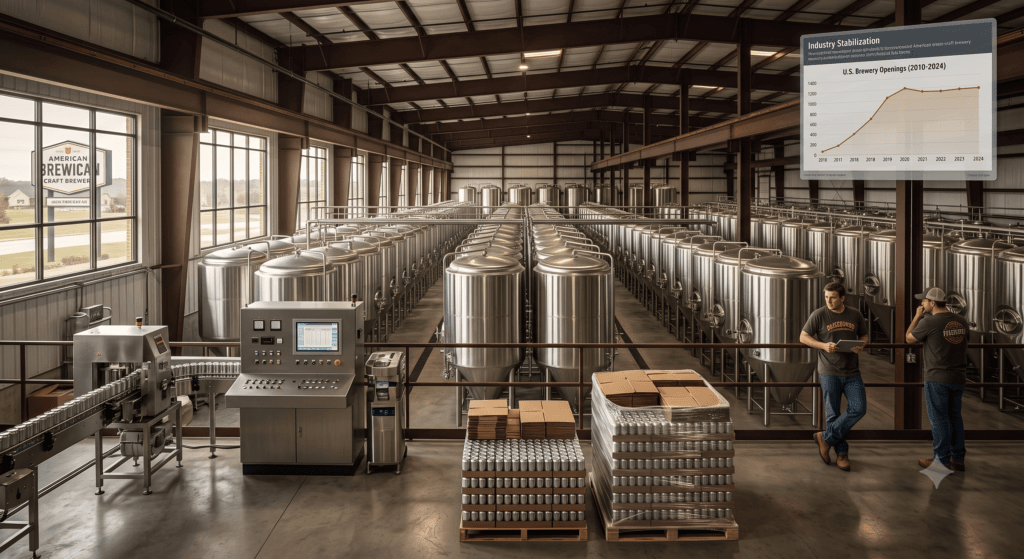
The number of breweries operating in the United States fell in 2025 for the first time since 2005. That's the headline that's been making rounds in trade circles, and it's worth taking seriously. Closures outpaced openings this year, and after two decades of almost uninterrupted expansion, the correction feels real.
But pull back to the wider frame and the picture looks different. According to Brewers Association data, 9,696 breweries were in operation in the U.S. last year. In 2010, that number was 1,779. That's a 445 percent increase in roughly 15 years, a pace of growth that would have seemed absurd to predict at the time. The per-capita distribution of those breweries shifted dramatically across states during the same period, with smaller, less obviously urban markets seeing some of the sharpest relative gains as the craft movement spread well beyond its coastal strongholds.
What the current slowdown represents is less a collapse than a market finding its ceiling. Oversaturation in key metros, rising input and real estate costs, and a beer-drinking population that has more options than ever, including spirits, ready-to-drink and no-alcohol alternatives, have all applied pressure simultaneously. The breweries that opened in 2012 riding a wave of novelty are now competing on quality, community, and margin management like any other hospitality business.
The 2025 contraction doesn't erase the infrastructure that was built. Thousands of taprooms, regional distributors, and trained production staff exist today that didn't in 2010. The question now is which of those 9,696 operations have built something durable enough to outlast the correction.
Sources: